



The History of the Helios Series
At Blenko, ideas rarely arrive quietly. They spark, evolve, and are shaped by both intention and circumstance. The Helios Series was one such idea: ambitious, experimental, and rooted in curiosity and craft.
This is the story of Helios, a complete journey through our solar system, interpreted in glass from first light to final orbit.
Ignition: Water Bottle Week 2024 and Mercury
The Helios Series launched during Water Bottle Week 2024 with Mercury, released January 22, 2024. From the start, this project lived in Shop 3, home of our iconic 384 Water Bottle.
Working with Shop 3, the design team drew inspiration from NASA imagery that revealed Mercury not as a flat gray rock, but a planet alive with silvery blues and flashes of gold. Frit was laid deliberately to create pockets of gold suspended within cool blue tones.
After sampling several base colors, the team landed on Hay, our rich gold Topaz cased in Crystal. Rendered in the mini-sized 384M, Mercury set the tone for a series rooted in experimentation and celestial storytelling.

Venus Rises, and Reimagines
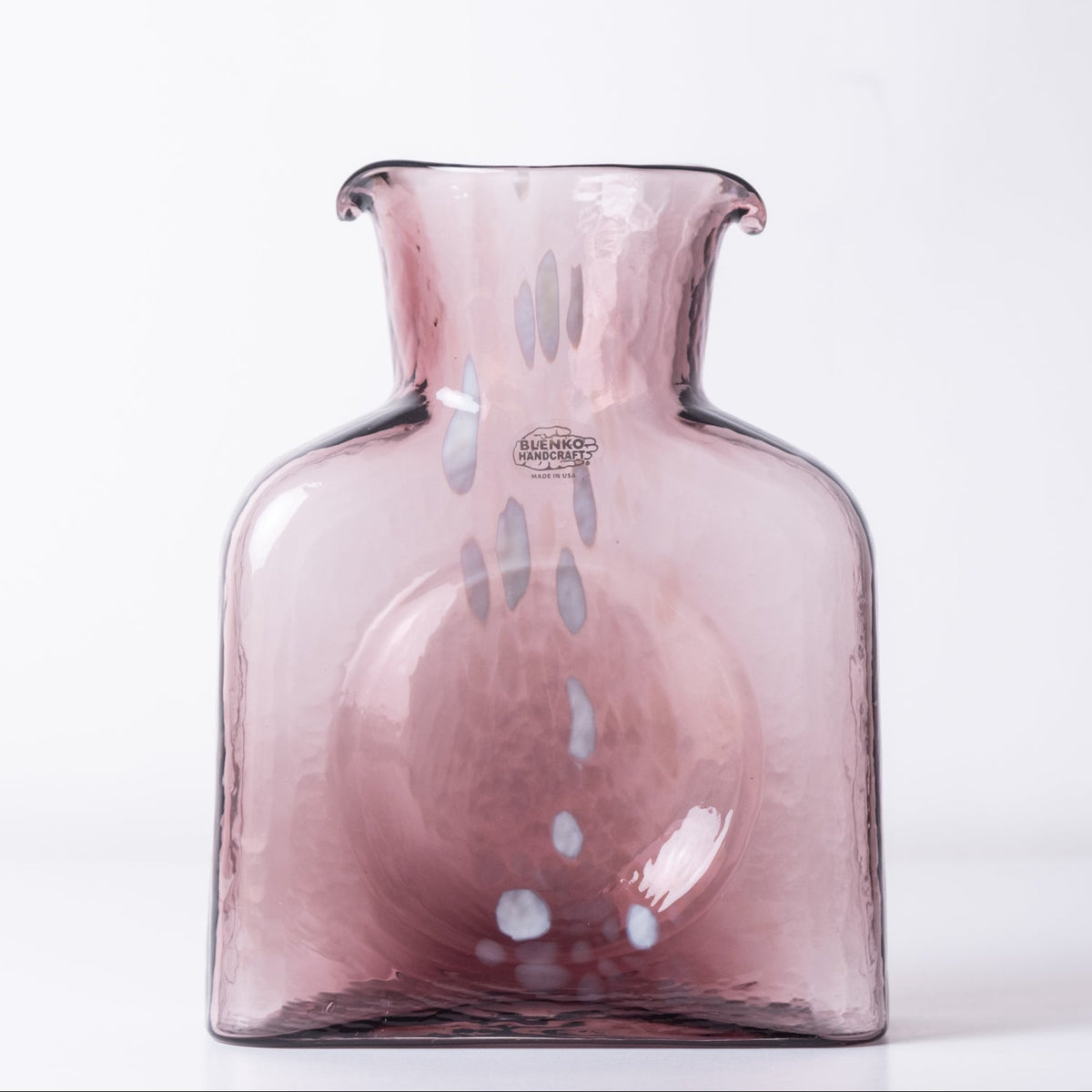
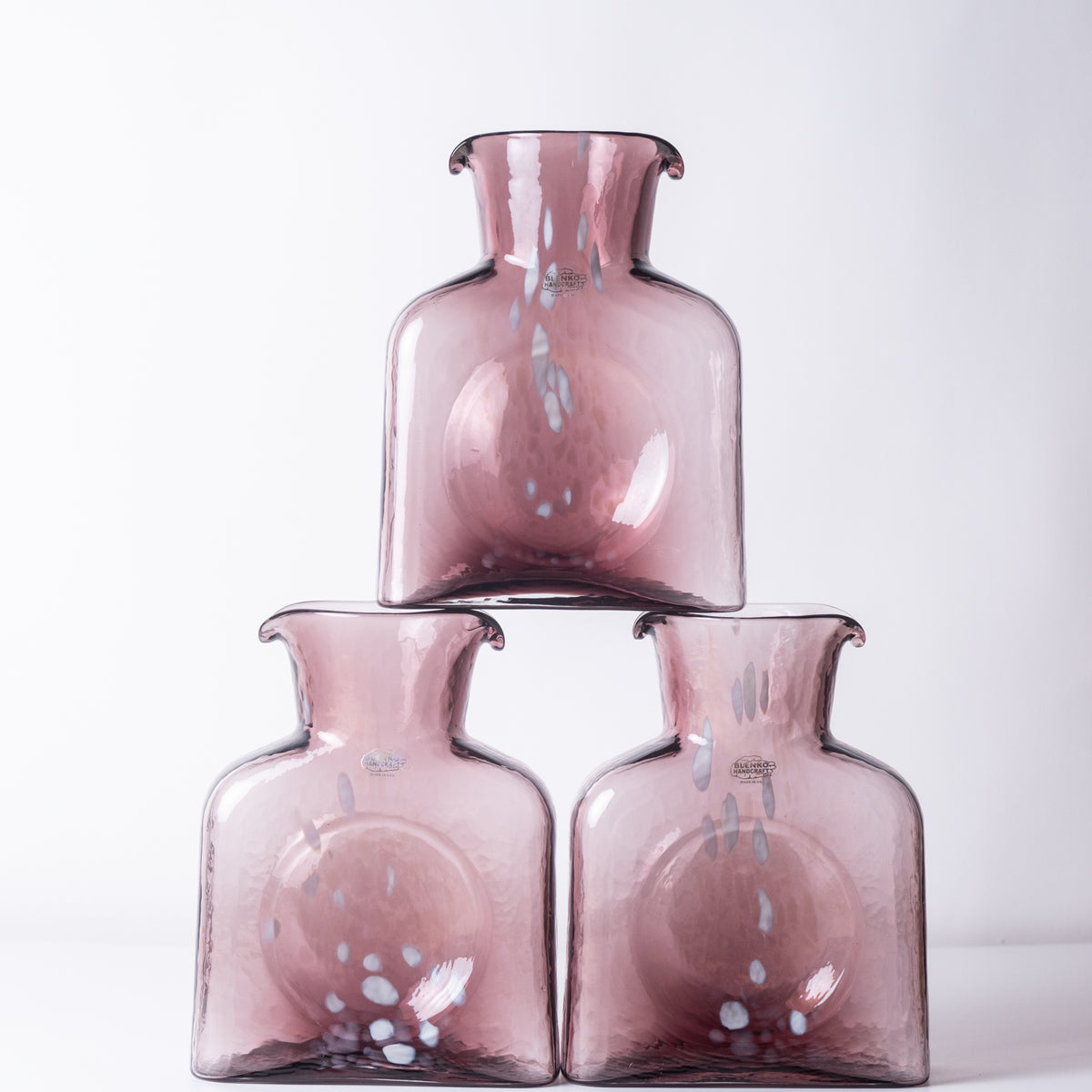
The second planned Helios bottle was Venus, which was teased on February 19, 2024,but ultimately never released in that initial form. Inspired in part by Botticelli’s The Birth of Venus, this bottle leaned into softness and romance. Delicate pinks and pastel tones swirled with white frit that evoked sea foam lifting the goddess from the sea.
But Helios was never meant to be predictable, and Venus would become the clearest example of how experimentation sometimes outpaces feasibility.
Soon after, an unforeseen furnace failure made it clear that Ganymede, the planned color of the release, could not be produced. Rather than halting momentum, this moment reshaped the series. As a result, the Ganymede release including Venus was cancelled, and the team returned to the drawing board, freeing the Helios Series from strict planetary order and opening the door to surprise.
This flexibility became part of Helios’ identity: a reminder that handmade glass is always a collaboration between intention and circumstance.
Always a Full Solar System
From the outset, Helios was conceived as a complete planetary series. We shared in-progress Helios prototypes as part of the New Blenko Now exhibit at the Birke Art Gallery of Marshall University in Huntington, WV, from June 21 to August 6, 2024. Visitors were invited behind the scenes to see unfinished ideas, early experiments, and forms still in flux, with the promise that designs might evolve even while the exhibit was on view.
During that exhibition, we announced an ambitious next step: Jupiter and Saturn were initially planned as Giga-sized water bottles. The following year we also explored producing the Sun at the Giga scale. While a small number of prototypes were successfully made, the size proved exceptionally difficult to execute with the consistency and quality we require. Ultimately, we made the decision not to release Giga Helios bottles as part of the formal series.
A handful of these experimental Giga bottles, including Jupiter, Saturn, and Sun attempts, were later offered via auction in January 2026, giving collectors a rare opportunity to own a piece of Helios’ experimental history.
Similarly, limited quantities of Ganymede and early Venus prototypes, produced during development but never formally released, were auctioned in August 2024, marking another moment where process and transparency became part of the story.
These moments reinforced one of Helios’ core values: experimentation matters, even when it doesn’t result in a standard release.
Eclipse: Drama in Glass
Released on March 1, 2024, Eclipse arrived just weeks ahead of one of the most anticipated celestial events in recent history: the total solar eclipse of April 8, 2024, which swept across the United States.
A rich Ruby body paired with a deep Cobalt dollop created an unabashedly dramatic composition, echoing the moment when daylight gives way to shadow. Timed to coincide with growing national excitement around the eclipse, this bottle captured the awe and unease that solar eclipses have inspired throughout human history.

Clair de Lune: The Moon, Reimagined
Released March 24, 2024, Moonlight (Clair de Lune) marked a major leap in research and development.
Using NASA’s publicly available lunar topography data, we digitally scanned a mini-sized 384M and overlaid the Moon’s surface texture onto the bottle’s concave grips. After testing several color treatments, Crystal was chosen to let the intricate surface speak for itself.
The result was a tactile celebration of space exploration, blending mid-century form with contemporary technology.

Earth Day and Gaia
On April 22, 2024, Helios turned homeward with Earth, released fittingly on Earth Day.
Crafted in Gaia, a layered combination of Turquoise over Malachite, this bottle captured sea, sky, and land in a single form. White frit suspended between the layers became drifting cloud cover, while a bright blue foot grounded the composition. Earth was a reminder that our own planet remains the most complex and beautiful system of all.

Mars and the Return to Fire
Released November 15, 2024, Mars drew inspiration from the Red Planet’s iron-rich surface and long-held fascination as a world shaped by fire, storms, and ancient water.
Beyond its bold red tones, Mars introduced a new layer of visual depth through the use of Aventurine frit. Aventurine is a specialized glass containing tiny metallic copper particles. When heated, these copper flecks retain their reflective properties, creating a subtle, glittering effect that shifts and dances as light moves across the surface.
The result is a bottle with a distinctly celestial shimmer, one that feels alive in the hand and rewards close inspection. Mars stands as both a technical achievement and a celebration of Blenko’s ability to blend material knowledge with planetary storytelling.

Venus Revisited
After being teased but never released in its first incarnation, Venus finally arrived on February 14, 2025, and proved well worth the wait.
Originally planned much earlier in the series, Venus was sidelined when the Ganymede furnace failed, making production impossible at the time. Like the planet she is named for, Venus proved resilient. Her eventual release became a testament to persistence, craftsmanship, and fire.
Swirling hues inspired by Venus’ dense clouds and molten surface radiate warmth and intensity. Fittingly, Venus is the hottest planet in our solar system, with surface temperatures exceeding 900°F, hot enough to melt lead. The parallel was not lost on us. Venus emerged as one of the most emotionally charged releases in the Helios Series, embodying both beauty and endurance.
As with all Helios bottles, her appearance was fleeting, making her arrival all the more special.

Blood Moon and Celestial Timing
Released on March 14, 2025, Blood Moon coincided exactly with a total lunar eclipse visible across the United States.
Crafted using the same custom mold we used for the Moon from NASA’s lunar data and made in the mini-sized 384M, the bottle’s fiery ruby tones mirrored the Moon’s transformation as it passed through Earth’s shadow. The timing was intentional, linking the object directly to a shared skyward experience and reinforcing Helios’ connection to real celestial events.

Expanding the Cosmos: Saturn, Neptune, Jupiter, and Uranus
As Helios moved toward completion, the outer planets allowed for bold color, texture, and movement.
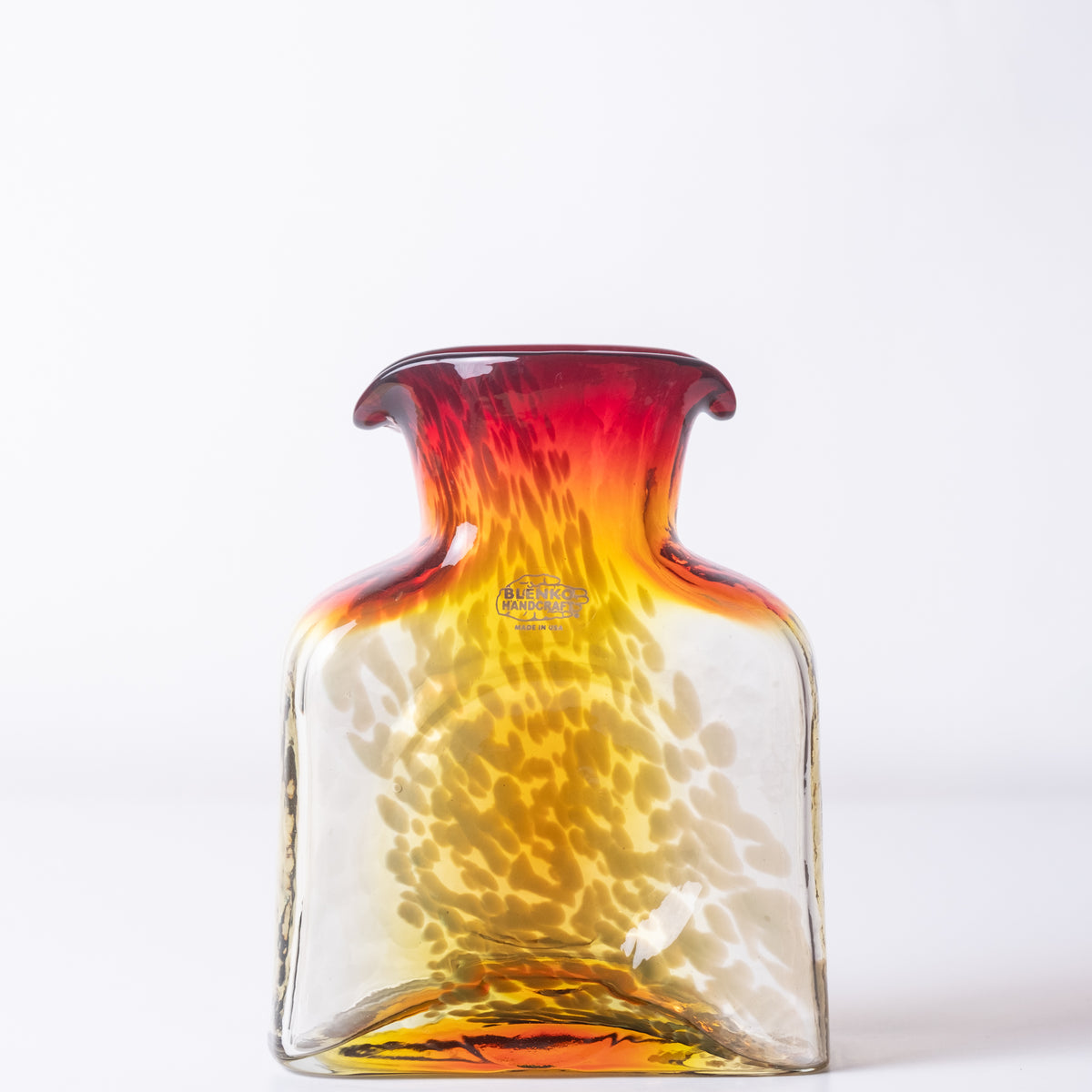
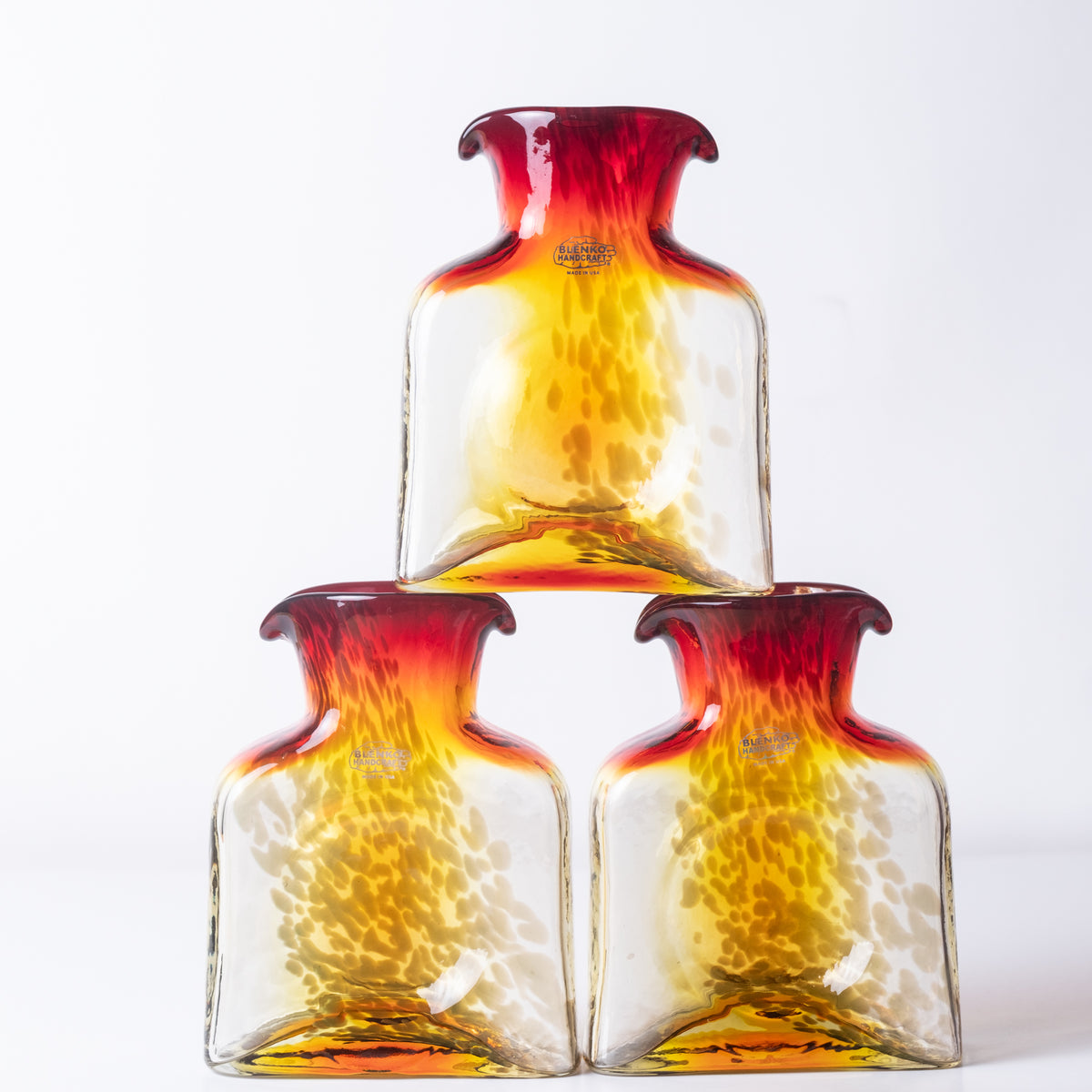
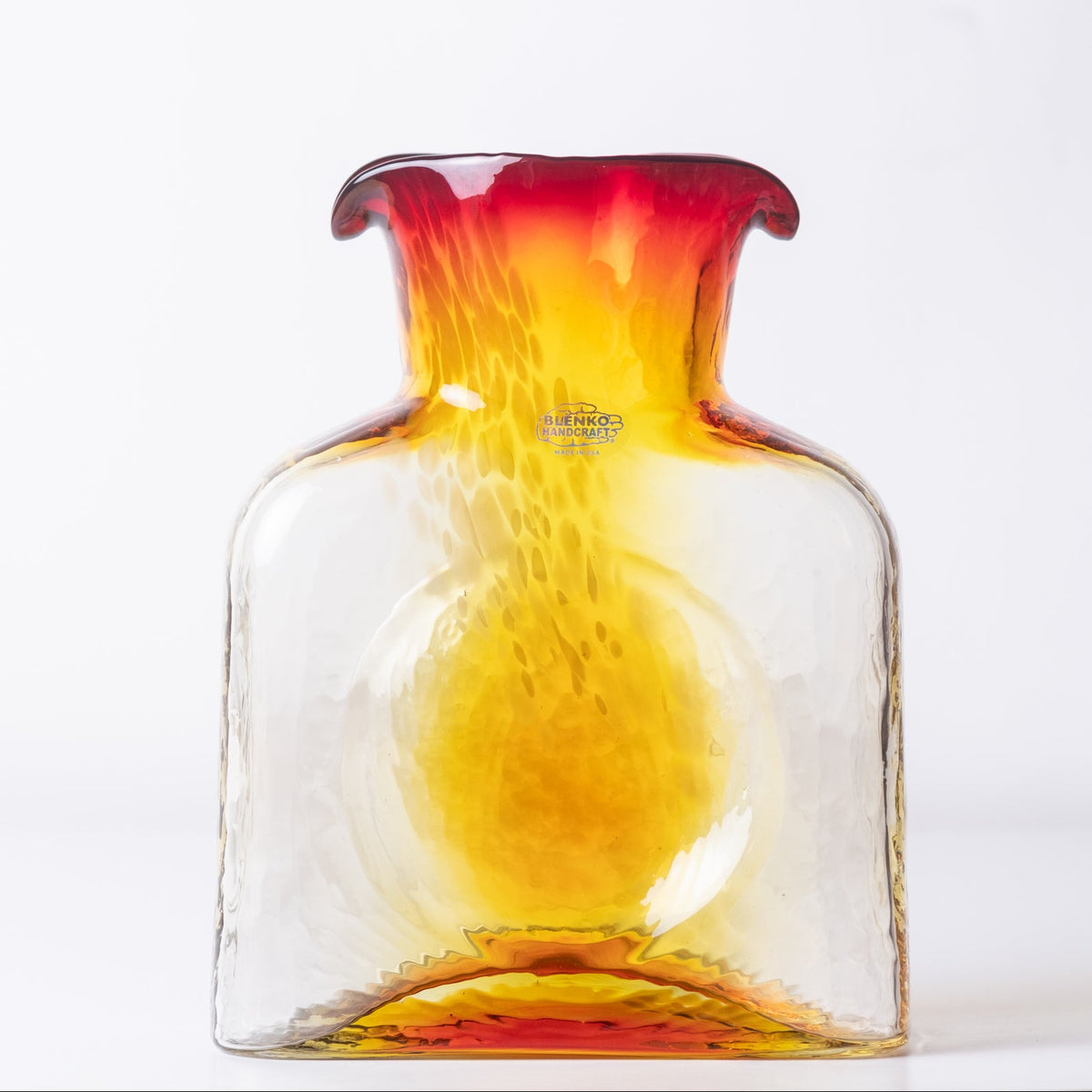
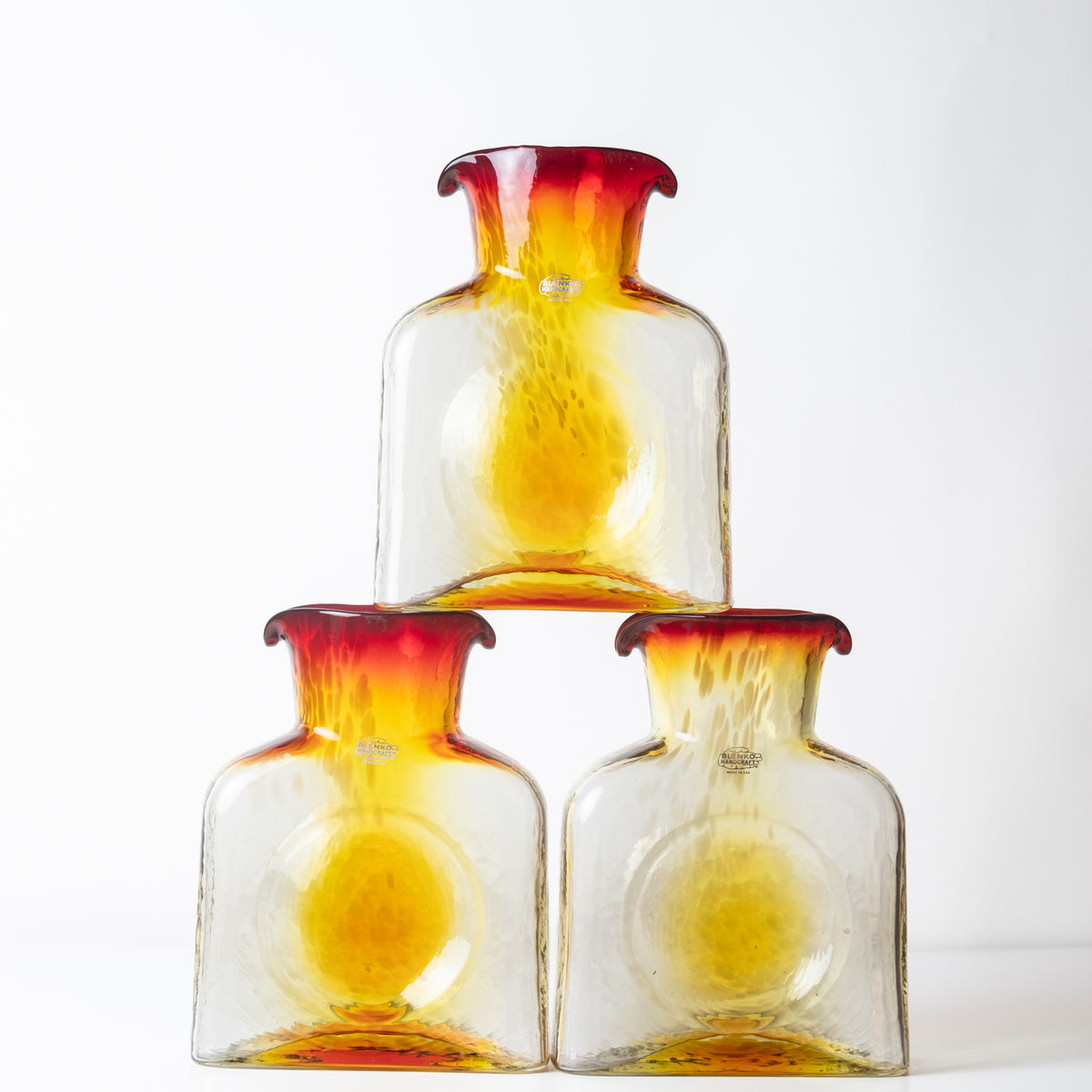
Saturn appeared in Dreamcicle, with brown and tan frit and a deep ruby trail wrapping around the bottle, a visual echo of the planet’s iconic rings.
Neptune captured the swirling soul of the windiest planet in the solar system. Formed in Seaspray glass and laced with Peacock and White frit, deep blues and dynamic motion conveyed a sense of supersonic energy.
Jupiter was rendered in swirling citrine glass with tans and browns, anchored by a bold orange accent representing the Great Red Spot, a storm larger than Earth itself.
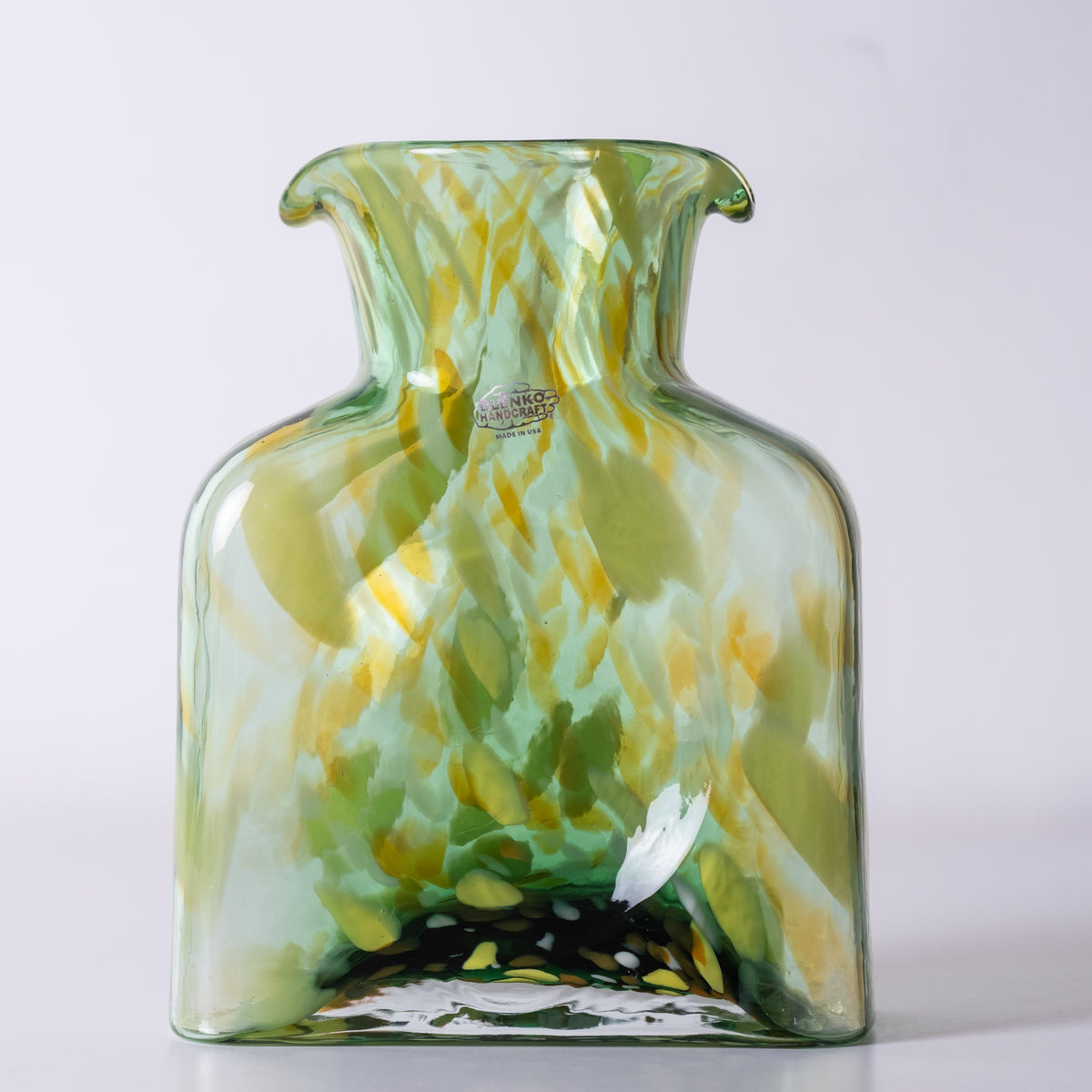
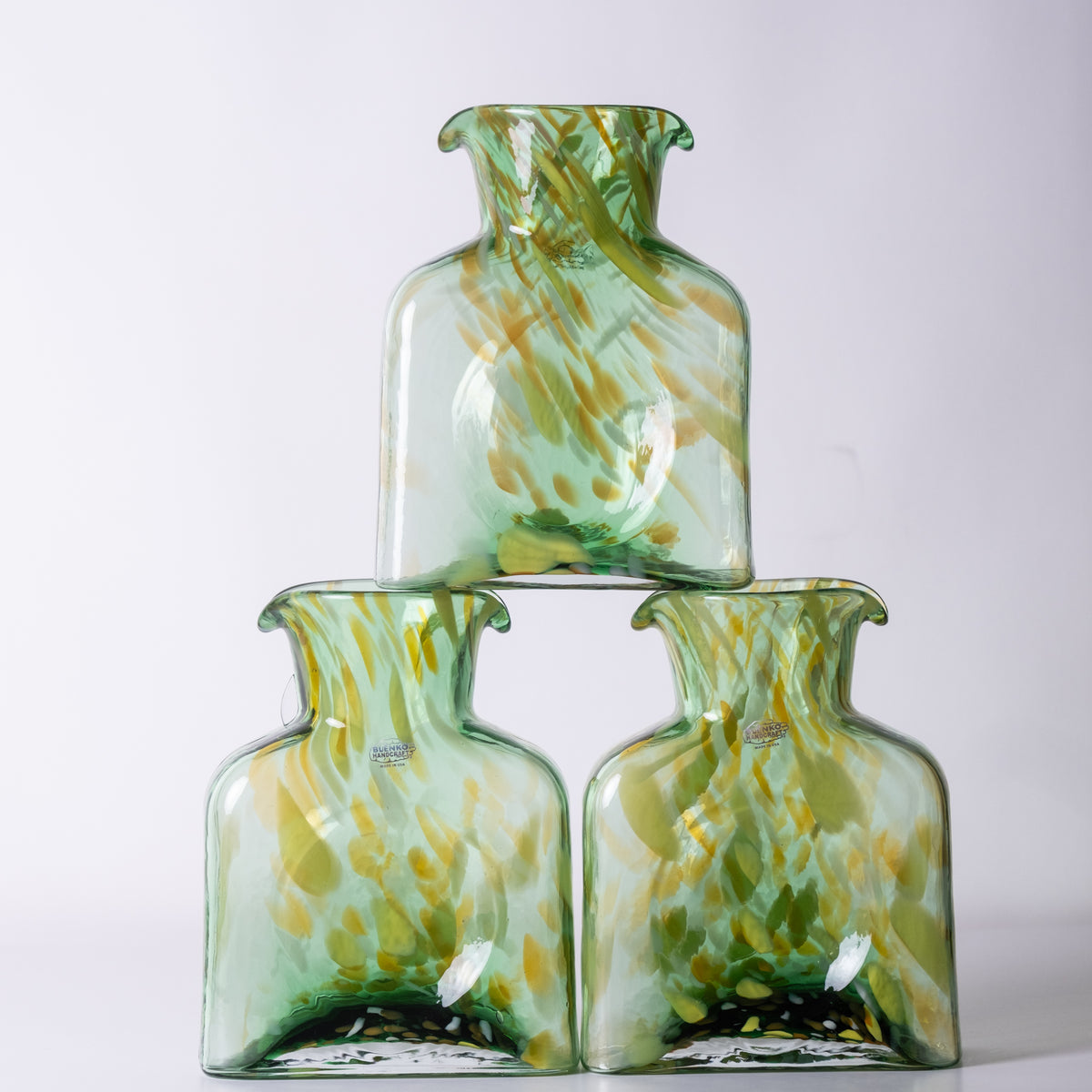
Uranus stood apart in cool crystal tones of blue, green, and white frit. A crackled crown finished the bottle, an artistic nod to the planet’s icy atmosphere and distant mystery.

Final Light: The Sun and Pluto
On December 22, 2025, Helios reached its conclusion.
Two final statements closed the series:
-
The Sun, radiant in citrine with ruby accents, captured the raw energy at the center of our system.
-
Pluto, the most distant body in the collection, introduced a nano-sized water bottle, just 4.25 inches tall, crafted in crystal with luminous blue frit.
From the heart of the solar system to its farthest edge, this final release completed the journey.

Helios Release Timeline
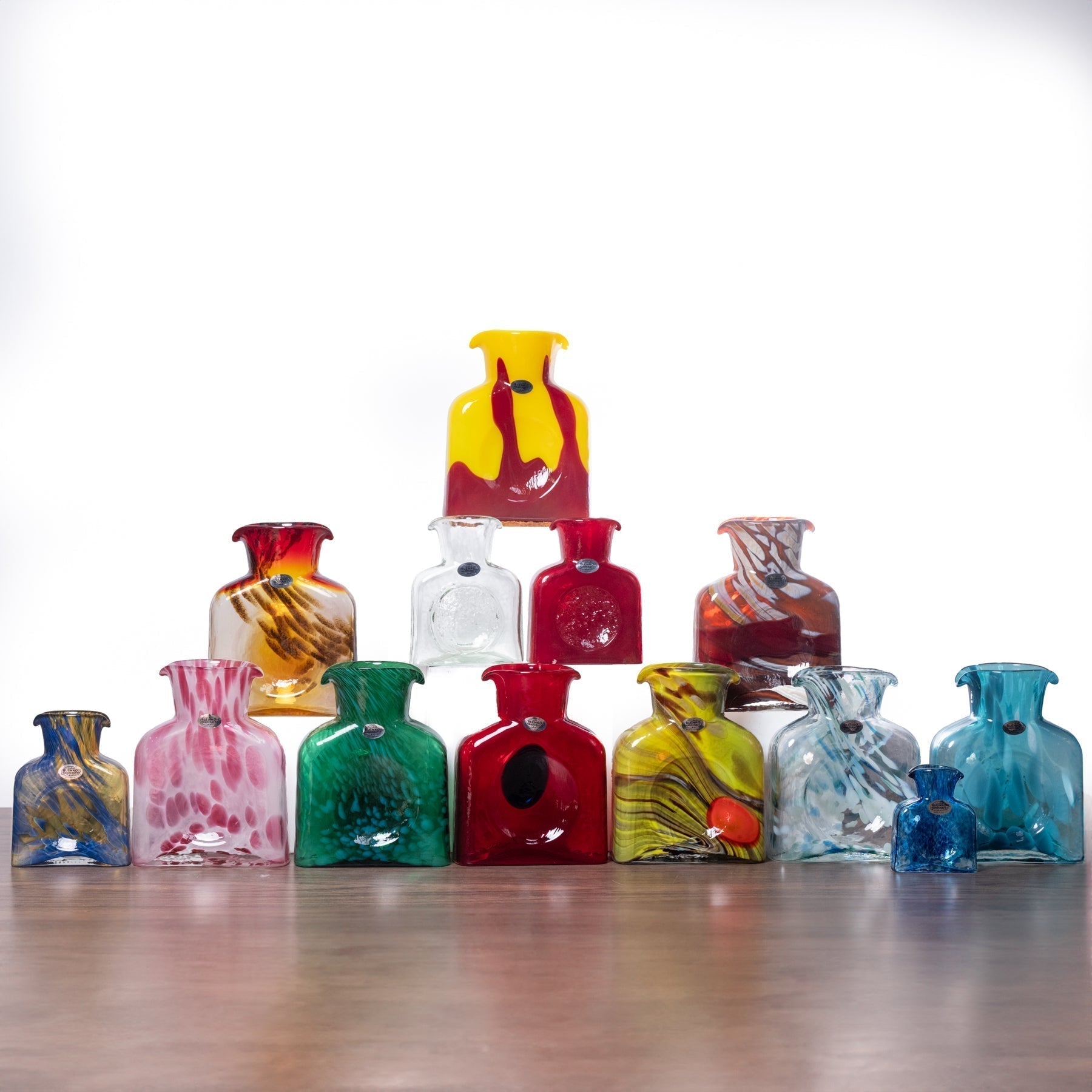
Below is a complete list of the Helios 384 releases, in order of appearance:
-
Mercury (384M Mini) – January 22, 2024
-
Eclipse (384 Regular) – March 1, 2024
-
Moon / Clair de Lune (384M Mini) – March 24, 2024
-
Earth (384 Regular) – April 22, 2024
-
Mars (384 Regular) – November 15, 2024
-
Venus (384 Regular) – February 14, 2025
-
Blood Moon (384M Mini) – March 14, 2025
-
Saturn (384 Regular) – July 7, 2025
-
Neptune (384 Regular) – July 7, 2025
-
Jupiter (384 Regular) – September 19, 2025
-
Uranus (384 Regular) – September 19, 2025
-
Sun (384 Regular) – December 22, 2025
-
Pluto (Nano-sized 384BB) – December 22, 2025
A Complete Orbit
Helios was never just about planets. It was about curiosity, experimentation, and the realities of handmade glass, embracing both breakthroughs and limitations along the way.
From Mercury to Pluto, Helios charts a full solar system rendered in glass. The series is complete, but its influence will continue to inform designs, techniques, and ideas still to come.
Thank you for joining us on this journey!





Leave a comment
This site is protected by hCaptcha and the hCaptcha Privacy Policy and Terms of Service apply.